Doctoral Students

Valeria Sofía Acevedo Argüelles

Valeria Sofía Acevedo Argüelles


Born and raised in Puerto Rico, Valeria studies the intrinsic connection between medical practice and the history of slavery, colonialism, and capitalism in the Hispanophone Caribbean. She joined the department in Fall 2025 after earning her B.A. in Comparative Literature and a minor concentration in Medical Humanities​​ from the University of Puerto Rico, Río Piedras Campus. Her approach is rooted on decolonial research methods and project-based learning, especially in relation to grass roots digital humanities initiatives.

Valeria welcomes any inquiries from prospective students and collaborators.

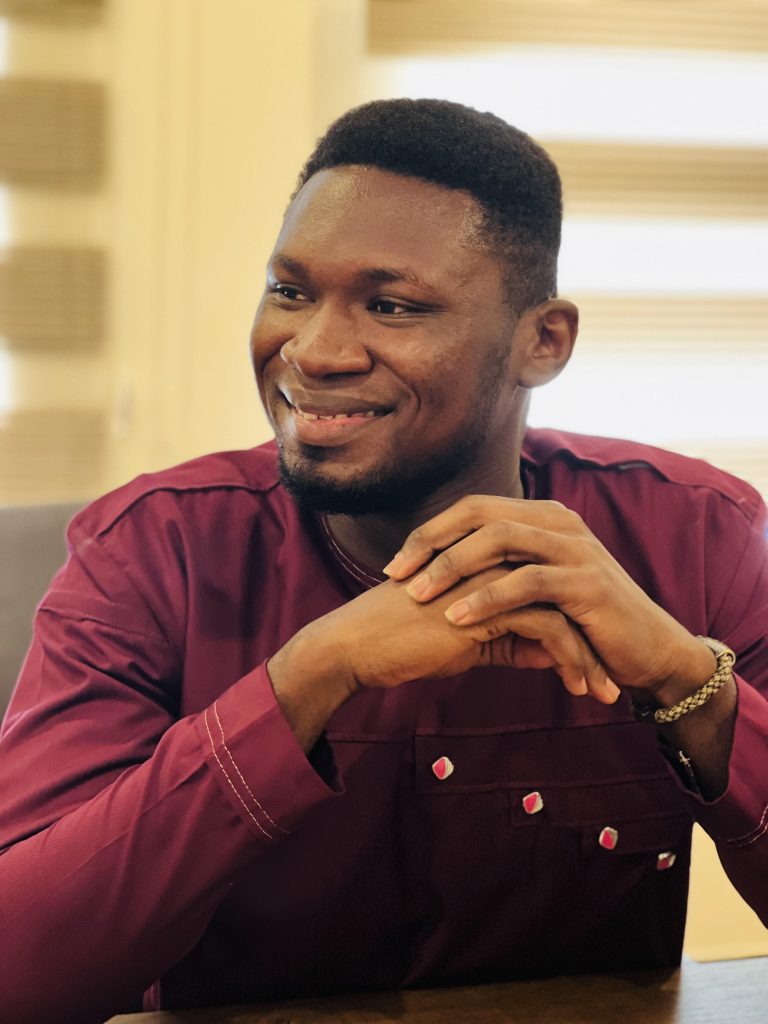
Richard Adjei

Richard Adjei


Richard joined the PhD programme in the History of Medicine in 2022. He holds a Bachelor of Arts Degree in History from the Kwame Nkrumah University of Science and Technology (KNUST), Kumasi, Ghana, and a Master of Science Degree in African Studies from the University of Oxford, United Kingdom, earning them in 2017 and 2020, respectively. His undergraduate and master’s dissertations focused on the history of medical pluralism and medical systems in Ghana, where he studied the history of traditional medicine, particularly its relationship with the State and interactions with Western biomedicine. For his PhD, Richard is researching on the nexus between social change and the epidemiology of non-communicable diseases in Ghana, focusing on stroke and other cardiovascular diseases. He is also interested in the political economy of health and diseases in West in Africa.
Leigh Alon

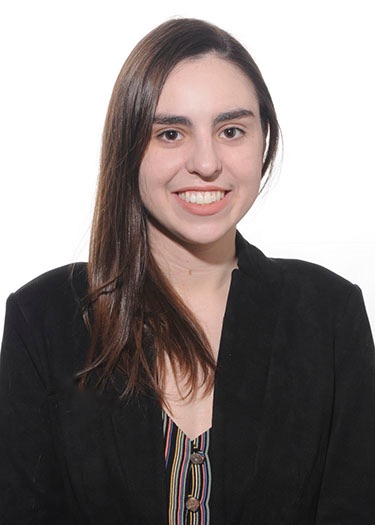
Leigh Alon


Leigh is an MD/PhD student at Johns Hopkins University in the department of the history of medicine. She has a B.A. in biology from the University of Chicago and before attending graduate school worked in HIV prevention at the Chicago Center for HIV Elimination. She is interested broadly in human subject research, pediatric psychopharmacology, eugenics, genomics, identity formation, and Jewish genetics.

Carter Barnett

Carter Barnett


Carter studies the history of Christian and Islamic healing in the Middle East. He holds a BA in History and Arabic from Baylor University and an MA in Middle Eastern Studies from the University of Texas at Austin. In 2022, he joined the doctoral program in the History of Medicine.

His dissertation project, currently in progress, challenges prevailing narratives of medical modernization and colonization by situating the proliferation of modern mission hospitals in the eastern Mediterranean within longstanding traditions of religious healing, institutional charity, and imperial patronage. The project explores how medical practitioners and patients navigated the ethical frameworks of medical practice in relation to religious commitments, and how Euro-American medical missions reshaped healthcare systems—particularly in Israel/Palestine.

His research has been generously supported by the U.S.-Israel Educational Foundation (Fulbright Israel), the W. F. Albright Institute of Archaeological Research, and the American Historical Association.

Emily Clark

Emily Clark


Emily received her B.A. in History from the University of Arizona in 2015 before joining the History of Medicine doctoral program at Johns Hopkins in 2016. She specializes in the study of women, gender, and sexuality in the early modern Atlantic world, with a focus on reproductive and racialized medicine. Her dissertation examines the working and intimate lives of enslaved, poor, and servant women in colonial New England, incorporating histories of the body, labor, sexuality, and race.

Sofia Grant

Sofia Grant


Sofia joined the History of Medicine PhD program in Fall 2023. She is from Colorado Springs, Colorado, and received a B.A. in Anthropology, Humanities, and Neuroscience from the University of Colorado Boulder, where she wrote an honors thesis that combined perspectives from anthropology and narratology to analyze the portrayal of diagnosis on two medical shows. Sofia is interested in a variety of topics in the history of medicine, but plans to specialize in the study of twentieth-century American biomedicine. Some of her current research interests include the history of diagnosis, autoimmune diseases, chronic and contested illnesses, doctor-patient relationships, illness narratives, and the intersections between the history of medicine, medical anthropology, and STS.

Devin Hernandez

Devin Hernandez


Devin Hernandez joined the History of Medicine program in Fall 2025. He earned his B.A. in History, with minors in American Studies and Anthropology, from Stetson University in DeLand, Florida in 2024. His honors thesis, “Two Steps Forward, One Step Back: The History of Methadone in America, 1947–1974,” examined the development and trajectory of methadone as a treatment for heroin addiction in mid-20th century America. Devin’s thesis was supported by archival data culled from the personal papers of the first commissioner of the Federal Bureau of Narcotics, Harry J. Anslinger, located at Penn State and the files of the Drug Enforcement Administration along with the files of the Special Action Office on Drug Abuse Prevention housed at National Archives. His work also featured oral history interviews Devin conducted with Richard Nixon’s directors of drug policy, Dr. Jerome Jaffe and Dr. Robert DuPont.

Before beginning his doctoral studies, he worked as a research assistant for historian David Courtwright, who is working on a monograph about the history of the modern opioid epidemic. Devin’s research interests include the history of opioids and the history of addiction treatment modalities, federal narcotic control policy, and more broadly, biomedical innovation, public health policy, and the histories of science, technology, and medicine globally.

Yemok Jeon

Yemok Jeon


Yemok’s research examines the pivotal role of health in Cold War national security within transpacific regions. Holding B.A. and M.A. degrees in History from Hanyang University in South Korea, he investigates global health dynamics across the conventional borders of the “Communist Camp” and the “Free World,” encompassing topics such as health insurance, biological warfare, and atomic bomb casualties at both elite and grassroots levels.

His research interests have been shaped by his transpacific experiences. In Korea, with funding from the National Health Insurance Service in Korea, he researched the history of health insurance and public hospitals at the Preventive Medicine Department of the College of Medicine in Hanyang. In the U.S., he proposed global health policies concerning North Korea as a Korea Foundation Junior Scholar at the Wilson Center in Washington D.C., financially backed by the KF.

Yemok actively engages with the public through educational and creative projects, including appearances on historical TV shows and the production of Hip-Hop rap music.

Jonathan Kuo

Jonathan Kuo


Jonathan Kuo is an MD/PhD student in the Medical Scientist Training Program at Johns Hopkins School of Medicine and Department of the History of Medicine. His academic work focuses on the history of health activism across the political spectrum in the twentieth-century Anglosphere and its global connections. He is particularly interested in how activist groups build coalitions across differences in race, gender, sexuality, nationality, and belief. His research more broadly explores the promises and perils of political change based on fluid markers of identity.

He has previously researched the history of secular non-medical exemptions to compulsory vaccination, the gendered construction of disease, and electronic medicine and medical devices in the US. His current project examines how knowledge from the human sciences shaped the early public health response to the HIV epidemic in the UK.

Jonathan graduated from UC Berkeley in 2022 with BAs in Rhetoric and Molecular and Cell Biology. He received an MSc with Distinction in the History of Science, Technology, and Medicine from the University of Manchester in 2023 with the support of a Marshall Scholarship. He welcomes any inquiries from prospective students interested in medicine, history, and any combination thereof.

Khushboo Rashid

Khushboo Rashid


Khushboo joined the History of Medicine PhD program in Fall 2024. She holds a B.A. in History from the University of Delhi and an M.A. in the History of Early Modern South Asia from Jamia Millia Islamia, India. Her research adopts a transregional approach to examine the circulation and exchange of medical knowledge (Yūnānī ibb), practices, medical commodities, and scientific illustrations across the early modern Persianate world. She also focuses on providing decolonised perspectives on medical knowledge and practices in early modern South Asia by analysing a wide range of sources, including Persian medical treatises, courtly chronicles, and travelogues.

SJ Zanolini

SJ Zanolini


SJ Zanolini specializes in both the history and practice of Chinese medicine. They earned a B.A. in History from the University of California at Berkeley, an M.A. in Chinese Literature from the University of Colorado at Boulder, and an M.S. in East Asian Medicine from Dongguk University at Los Angeles. Clinically, SJ resists narrow specialization while remaining most interested in conditions with varied symptomatology, periodicity, or that otherwise layer, or defy, biomedical explanation. Academically, their research interests encompass the relationship between diet and healing in medical practice, geographic and seasonal determinants of health and illness treatment, and the interplay between medical, religious, elite, and popular ideas in Chinese history. Their master’s thesis used close reading to historically and intellectually situate a set of 7th century medical manuscripts preserved in the Silk Road town of Dunhuang, China. They are currently researching how newly introduced food crops become incorporated into existing understandings of the medicinal actions of foods in the 16th and 17th centuries.